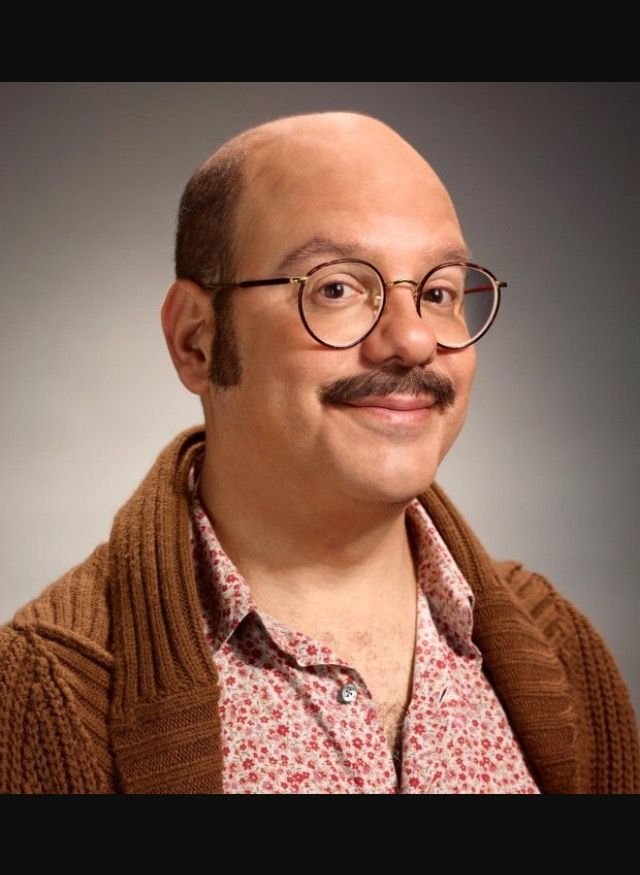
David Cross's Portrayal of Ian Hawke Drew Criticism and His Public Dissatisfaction
David Cross. The name alone conjures images of sardonic wit, biting social commentary, and a career forged in the fires of alternative comedy. He’s the brilliant, often curmudgeonly, voice behind some of the most incisive satire of our time, from Mr. Show with Bob and David to Arrested Development. So, when the news broke that Cross was joining the cast of the live-action Alvin and the Chipmunks franchise as the villainous Ian Hawke, the industry and his loyal fanbase collectively scratched their heads. What followed was a fascinating, often uncomfortable, saga of artistic integrity clashing with commercial reality, marked by David Cross's portrayal of Ian Hawke becoming a lightning rod for criticism and his own very public, very vocal dissatisfaction.
This wasn't just another acting gig; it became a cultural flashpoint, a case study in how a beloved comedian navigates the choppy waters of Hollywood’s demands, and the often harsh judgment that comes with stepping outside one’s perceived lane.
At a Glance: The Ian Hawke Saga
- The Role: David Cross played Ian Hawke, the main antagonist, in the Alvin and the Chipmunks live-action film franchise (2007, 2009, 2011).
- Commercial Success, Critical Discord: The films grossed over a billion dollars worldwide, but Cross's involvement drew heavy criticism from fans and fellow comedians.
- The "Sell-Out" Accusation: Many fans, familiar with Cross's indie and alternative comedy roots, felt his participation was a betrayal of his artistic principles.
- Patton Oswalt's Role: Comedian Patton Oswalt famously quipped that he and Brian Posehn rejected the role, stating, "David Cross caught it," igniting further controversy.
- Cross's Defense: Cross admitted he took the role for the substantial paycheck, which funded a summer cottage and surpassed earnings from all his other projects combined. He expressed regret over the perception and the personal hurt from the backlash.
- Escalating Discontent: His experience worsened with the sequels, culminating in Chipwrecked, which he called "the most unpleasant experience" of his professional life.
- Legal & Financial Fallout: Public complaints about his experience led to Cross losing a $150,000 bonus due to violating a non-disparagement clause.
The Unexpected Antagonist: David Cross as Ian Hawke
Imagine a world where the guy who gave us the "Great Job!" clip and Tobias Fünke's never-nude complex suddenly becomes the smarmy record executive trying to exploit singing rodents. That's essentially the paradox of David Cross in the Alvin and the Chipmunks films. His character, Ian Hawke, is a slick, ambitious, and ultimately ruthless music executive who initially manages the Chipmunks, trying to control their careers and profit from their talent. He's the perfect foil for the innocent, fun-loving Chipmunks and their kindly guardian, Dave Seville (Jason Lee).
On paper, casting a comedian known for his sharp tongue and cynical edge as a corporate villain might seem like a stroke of genius, offering a subversively dark performance in a children's movie. However, for many, especially those deeply entrenched in Cross's previous body of work, it felt less like subversion and more like… something else entirely. For a deeper dive into the character, you might want to Explore Ian Alvin and the Chipmunks and his motivations across the franchise.
The "Sell-Out" Storm: Fan Backlash Begins
The moment trailers for the first Alvin and the Chipmunks film (2007) began to circulate, the internet — then still in its nascent stages of social media-driven outrage — erupted. Fans of David Cross, who had come to associate him with niche, intelligent, and often anti-establishment comedy, felt a profound sense of disappointment, even betrayal. His move into a mainstream, family-oriented blockbuster, particularly one based on an established and somewhat saccharine children's property, was perceived as the ultimate "sell-out."
Blog comments, as reported by The New York Observer, were brutal, painting Cross as "a smug, condescending asshole" and "a huge prick." This wasn't just casual disagreement; it was a deeply personal attack on his perceived integrity. For many, Cross wasn't just an actor; he was a standard-bearer for a certain kind of comedy, and his involvement with the Chipmunks felt like a capitulation to the very commercial forces his earlier work often satirized.
Patton Oswalt's Punchline and Its Fallout
The criticism wasn't limited to anonymous internet commenters. On December 10, 2007, fellow comedian Patton Oswalt, known for his own cerebral stand-up and acting roles, fanned the flames with a now-infamous MySpace blog post titled "Godawful/Thank God." Oswalt recounted how he and Brian Posehn had both been offered the role of Ian Hawke, but after reading the script, they "threw the script across the room in disgust." His punchline, "David Cross caught it," landed with the force of a comedic atom bomb.
This wasn't just a friendly jab; it was a public shaming, amplified by Oswalt's own significant comedic standing. It crystallized the sentiment that Cross had made a questionable artistic choice. The incident became a staple of "comedian-on-comedian" lore, with Flavorwire later naming Oswalt's comment among the harshest of all time in 2014. It put Cross squarely in the defensive spotlight, forcing him to address the widespread disappointment head-on.
Cross's Defense: Money, Regret, and the Internet
On December 31, 2007, Cross took to his own blog, The Bob and Davider, to address the mounting criticism. His explanation was candid, almost painfully so. He admitted that he had initially rejected the role. However, six months later, facing different financial realities, he accepted it. The reason was purely pragmatic: the film offered him a substantial sum—enough to pay for a down payment on a summer cottage and more than "all my other projects combined."
This admission, while honest, didn't entirely quell the storm. While some might empathize with the need to "pay the bills," others saw it as confirmation of their "sell-out" narrative. Cross himself claimed he hadn't even watched the finished film and expressed sincere regret at being perceived as solely motivated by money. He also acknowledged feeling "genuinely hurt by the criticism," attributing much of it to "lazy and not really thoughtful" internet commentary.
Adding another layer to the drama, Oswalt clarified his earlier remark in January 2008. He stated it was a "snide, private in-joke" referring to a similar comment Cross himself had once made. Oswalt emphasized he held no personal judgment about Cross's decision to take the role, stating, "I don’t care what any of my friends – or, for that matter, enemies – does to pay the bills." This clarification, however, came after the initial damage was done, and the "David Cross caught it" line had already become part of comedic legend.
When Critics Weigh In: Professional Takes on Cross's Predicament
Beyond the fan forums and fellow comedians, professional writers also weighed in on the curious case of David Cross and the Chipmunks. Some, like Jeff Bergstrom of BrooklynVegan, took a pragmatic view, suggesting "no explanation was needed; a person needs work." This perspective acknowledged the often harsh realities of the entertainment industry, where even established artists sometimes take roles for financial security.
Others were less forgiving of Cross's public defense. C. Robert Cargill, for instance, felt Cross "lost" in his detailed response to Oswalt, implying that sometimes silence or a simple acknowledgment of the paycheck is the better strategy. Playlist echoed this sentiment, calling Cross's blog post an "extremely lengthy and tedious defense," and unfavorably comparing him to Jason Lee (who played Dave Seville in the same franchise) for not simply taking the paycheck quietly. Steve Hyden of The A.V. Club was even more blunt, describing Cross's post as a "snide, dishonest, and largely unsuccessful attempt" to deflect criticism. These critiques highlighted a common dilemma for public figures: how much explanation do you owe your audience, and when does defending yourself become counterproductive?
The Sequels: From Bad to Worse
If the first Alvin and the Chipmunks film was a challenging experience for Cross, the sequels proved to be significantly worse. He reprised his role as Ian Hawke in Alvin and the Chipmunks: The Squeakquel (2009) and Alvin and the Chipmunks: Chipwrecked (2011). His public statements reveal a growing level of frustration and disdain for the projects.
It was Alvin and the Chipmunks: Chipwrecked that seemed to push Cross over the edge. He described it as "literally without question, the most unpleasant experience I've ever had in my professional life." This wasn't just about the artistic merit (or lack thereof) of the film; it delved into deeply personal and professional grievances.
Among his many complaints, Cross accused an unidentified female producer of antisemitism and mistreatment. He also recounted a particularly bizarre and humiliating incident: being "forced at legal gunpoint" to spend a week shooting footage on a Carnival Cruise. The irony? He had no lines and, to add insult to injury, was unrecognizable in a pelican suit, simply standing there for continuity shots. This anecdote, more than any other, painted a vivid picture of the sheer absurdity and indignity he felt he endured. The experience clearly transcended mere professional dissatisfaction, bordering on psychological torment for an artist known for his intellectual and subversive work.
The Price of Speaking Out: A $150,000 Lesson
Cross's outspokenness, while cathartic for him, came with a significant financial cost. His detailed, often scathing, public comments about his grievances concerning the Alvin and the Chipmunks franchise directly violated a non-disparagement clause in his contract.
The consequence? A hefty $150,000 bonus was withheld. This serves as a stark reminder of the tightrope celebrities walk, especially when bound by legal agreements. While artists often feel compelled to share their true experiences, particularly when they feel exploited or mistreated, the financial and legal ramifications can be severe. Cross's decision to speak out, despite the clear contractual risk, underscores the depth of his frustration and the personal toll the experience took on him. It became a public demonstration that even for a significant paycheck, some experiences are simply not worth the mental or emotional cost.
Beyond the Chipmunks: Reflecting on Artistic Integrity vs. Practicality
The saga of David Cross and Ian Hawke offers a compelling, if uncomfortable, look at the perennial struggle between artistic integrity and the practical demands of making a living in Hollywood. For many artists, especially those who build their careers on a distinct voice and anti-establishment stance, the lure of mainstream success can be a double-edged sword.
Why do artists "sell out"?
- Financial Security: As Cross himself demonstrated, sometimes a single mainstream gig can offer more financial stability than years of independent work. This can fund passion projects, family needs, or simply provide peace of mind.
- Exposure: A wider audience, even through a critically panned project, can sometimes open doors to other, more creatively fulfilling opportunities.
- New Experiences: Some actors might genuinely want to try something different, even if it's outside their usual genre.
However, the backlash Cross faced highlights the fierce protectiveness fans feel over their beloved artists' personas and perceived values. When an artist deviates from that expectation, the judgment can be swift and harsh. Cross's journey with Ian Hawke wasn't just about a role; it became a public referendum on the choices artists make and the invisible contracts they hold with their audience.
The Lingering Echoes of Ian Hawke
David Cross's portrayal of Ian Hawke remains a fascinating footnote in his illustrious career. It's a testament to his versatility as an actor, capable of inhabiting a role he clearly despised, but also a stark illustration of the personal and professional costs that can come with such decisions. His candidness, though costly, provided a rare glimpse behind the curtain of Hollywood's less glamorous realities.
For anyone navigating their own career choices, whether in entertainment or elsewhere, Cross's story offers valuable lessons:
- Understand Your "Why": Be clear about your motivations for taking a project. Is it for money, passion, or exposure?
- Weigh the Costs: Consider not just the financial benefits but also the potential emotional, reputational, and contractual costs.
- Know Your Audience: Be prepared for how your choices might be perceived, especially if you have a deeply loyal fanbase with specific expectations.
- The Power of Your Voice: While there can be penalties, speaking honestly about challenging experiences can also provide catharsis and transparency, even if it comes at a price.
Ultimately, Ian Hawke might be just another villain in a children's movie for many. But for David Cross, and for those who followed his journey through the Chipmunk-verse, it's a story of compromise, public scrutiny, profound regret, and the high price of creative dissatisfaction. It's a reminder that even Hollywood's most successful endeavors can hide deeply unpleasant personal experiences for those involved.