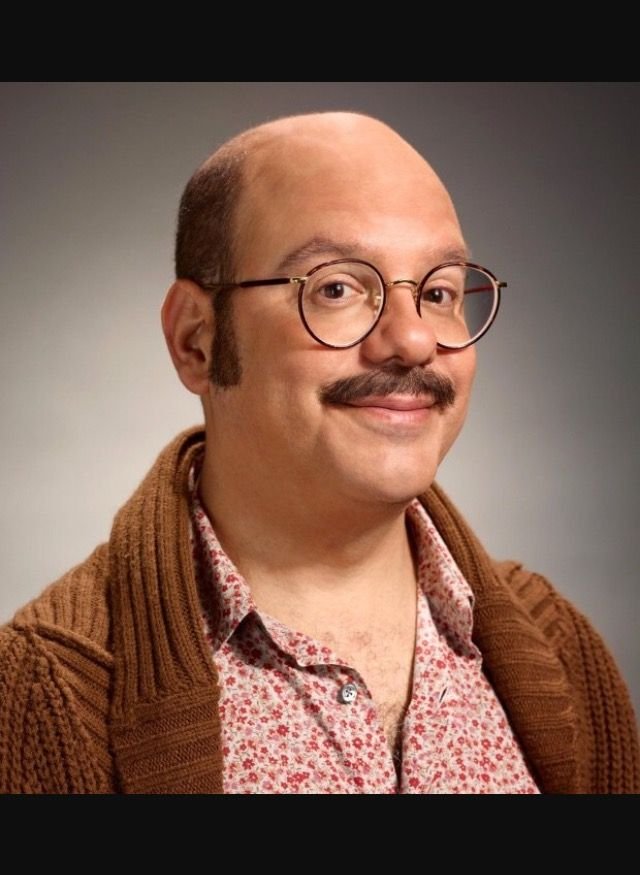
When you hear the name "Ian Hawke," what comes to mind? For many, it's the smarmy, perpetually put-upon music executive from the Alvin and the Chipmunks film franchise, a character whose dramatic falls from grace are as memorable as his over-the-top antics. Yet, delve deeper into the rich tapestry of fictional characters bearing this name, and you uncover another, vastly different Ian Hawke: a multilingual scholar, a decorated war veteran, a Pulitzer-winning journalist, and eventually, a key figure in the sprawling, magical saga of Amber.
This comprehensive Ian Hawke Character Biography will navigate the intriguing lives of these two distinct personalities, offering you a deep dive into their origins, developments, and lasting impact on their respective narratives. Prepare to explore stories of comedic villainy, surprising redemption, military heroism, academic pursuit, and a journey across dimensions.
At a Glance: Two Lives of Ian Hawke
Here’s a quick overview of the two prominent characters who share the name Ian Hawke:
- Ian Hawke (Alvin and the Chipmunks Film Franchise):
- Role: Main antagonist in the first two films, reformed anti-hero in the third.
- Key Traits: Greedy, exploitative, comedic, scheming, later fallible and redeemable.
- Actor: David Cross, celebrated for his hilarious portrayal.
- Arc: Rises as a music mogul, falls due to his own ambition, finds a surprising path to redemption as a screenwriter.
- Relationship to Protagonists: Initially Dave Seville's college roommate and enemy of the Chipmunks/Chipettes; later becomes their friend.
- Dr. Ian Hawke (Divergent History / Amber Chronicles):
- Role: Complex, multi-faceted character in a divergent history universe, later revealed to be from Amber.
- Key Traits: Highly intelligent, multilingual, resilient, observant, adaptable, a natural leader.
- Professions: WWII SOE officer, international lawyer, war correspondent, Pulitzer-winning journalist, military historian, university lecturer.
- Arc: From World War survivor and secret agent to a respected scholar and interdimensional traveler, managing multiple identities across divergent realities.
- Relationship to Protagonists: Descendant of Amber royalty (son of Bleys), actively involved in the politics and travel of Shadow.
The Hollywood Maverick: Ian Hawke of Alvin and the Chipmunks
Let's first turn our attention to the Ian Hawke that likely springs to mind for most: the conniving yet endlessly entertaining record executive from the Alvin and the Chipmunks film series. Portrayed with a masterful blend of exasperation and avarice by David Cross, this Ian Hawke offers a captivating journey from antagonist to an unlikely ally.
Origins and Unchecked Ambition
Our first introduction to Ian Hawke paints him as a slick, ambitious music executive at Jett Records, a man clearly driven by money and fame. He’s initially established as Dave Seville's former college roommate, a detail that subtly underscores their contrasting personalities and moral compasses even before the Chipmunks enter the picture. While Dave is struggling to make ends meet and nurturing a genuine passion for music, Ian is already deep in the cutthroat world of corporate entertainment, always on the lookout for the next big thing—or, more accurately, the next big cash cow.
His initial encounter with the musical prodigies—Alvin, Simon, and Theodore—is purely opportunistic. Recognizing their undeniable talent and marketability, Ian wastes no time in signing them, not out of any artistic appreciation, but with dollar signs firmly in his eyes. He sees them as a product, a means to regain his former glory and secure his financial future, caring little for their well-being or the emotional toll his demanding schedule takes on them.
The Villain's Grandeur: Exploitation and Comedic Malice
Across the first two films, Ian Hawke embodies the quintessential greedy businessman who exploits his stars. In Alvin and the Chipmunks (2007), he quickly becomes the primary antagonist. You witness his escalating attempts to control the Chipmunks, isolating them from Dave and pushing them to their physical and emotional limits. His comedic villainy shines through in these moments, with David Cross’s delivery making even his most sinister plans feel entertainingly over-the-top. Ian's ambition knows no bounds, and he truly believes he has found his ticket back to the top, regardless of who he has to step on to get there.
The sequel, Alvin and the Chipmunks: The Squeakquel, sees Ian's desperation deepen after his spectacular fall from grace in the first film. Having lost his job and credibility, he stumbles upon the Chipettes—Brittany, Jeanette, and Eleanor—and sees them as his second chance at reclaiming fame and fortune. His tactics remain unchanged: he attempts to mold them into his vision of pop stardom, once again disregarding their health and safety for personal gain. This time, his machinations are even more frantic, his pride wounded, leading to some of his most memorable (and sometimes cringe-worthy) comedic moments, such as his ill-fated attempt to cross-dress as Brittany.
Despite his deplorable actions, Ian Hawke remains a surprisingly likable and enjoyable villain. His character is designed to be a humorous jerk, full of sarcastic quips, cheeky maneuvers, and a sneaky cleverness that often backfires spectacularly. David Cross’s performance is pivotal, lending Ian an almost cartoonish villainy that prevents him from ever feeling truly menacing. The first film, in particular, showcases his most hilarious antics, solidifying his place as a memorable foil for Dave and the Chipmunks.
The Great Fall and Unexpected Redemption
A core element of Ian Hawke's arc in the first two films is his consistent comeuppance. Each attempt to exploit the talented rodents ends in spectacular failure, leading to public humiliation, career ruin, and a significant drop in popularity. By the end of The Squeakquel, he’s at his absolute lowest, seemingly without a shred of dignity or professional standing.
However, Ian's journey takes a remarkably unexpected turn in Alvin and the Chipmunks: Chipwrecked. In a move that surprised many viewers, Ian undergoes a significant character development, transforming from a purely greedy music director into a more likable, minor anti-heroic figure. His redemption arc, largely occurring off-screen between the second and third films, is a testament to the franchise's willingness to evolve its characters. You encounter him on a tropical island, a shadow of his former self, having lost everything, but seemingly gained a new perspective.
This reformed Ian Hawke slowly begins to befriend Dave and the Chipmunks/Chipettes. He demonstrates a newfound selflessness and even a degree of genuine care, a stark contrast to his past. His transition culminates in a new career as a screenwriter, leveraging his unique experiences (and perhaps his lingering industry connections) to sell Zoe's story to Hollywood. This not only allows him to regain his wealth and make Zoe famous but also establishes him on genuinely good terms with Dave and his adoptive family.
Many critics and fans consider Ian's redemption arc to be surprisingly well-executed and natural, providing more meaningful character development than even some of the main protagonists in the live-action tetralogy. It allows the audience to see a human side beneath the layers of greed and ambition, proving that even the most avaricious can find a path to change. If you're looking for a deeper dive into his journey, you can always Explore Ian Alvin and the Chipmunks in more detail.
The Actor's Touch and Lingering Questions
David Cross's portrayal is integral to Ian Hawke's enduring appeal. His comedic timing, expressive face, and ability to perfectly embody the exasperated yet scheming executive elevated the character beyond a simple villain. While his performance in the first film is often cited as his funniest, and Chipwrecked brought a new comedic dimension to his reformed persona, even his "least funny" outing in The Squeakquel was still highly entertaining.
Ian's absence from the fourth film, Alvin and the Chipmunks: The Road Chip, is noteworthy. This was reportedly due to David Cross’s decision to resign from the films, admitting he primarily participated for financial reasons and was also busy with other projects like Kung Fu Panda 3. While understandable from a production standpoint, his absence does, for some, lessen the meaning of his hard-won redemption arc in Chipwrecked, leaving a slight narrative gap for the character.
Historically, Ian Hawke is often seen as the live-action counterpart to "Uncle" Harry from the original 80s cartoon series. However, a crucial distinction is that Ian, unlike Harry, ultimately reforms, showcasing a more complex and hopeful character journey.
The Shadow Weaver: Dr. Ian Hawke (Divergent History & Amber Chronicles)
Beyond the glitz and greed of Hollywood, another figure bearing the name Ian Hawke exists in a realm of high fantasy and divergent history. This is Dr. Ian Hawke, a character of immense depth, intellect, and resilience, whose biography spans continents, wars, and even the very fabric of reality. His story is one of constant evolution, hidden identities, and a relentless pursuit of knowledge and justice.
Ian Michael Cushing: A Life Forged in War and Words
Born Ian Michael Cushing on Tenterden, a near-Earth equivalent with a fascinatingly divergent history, this Ian's early life was steeped in the tumultuous aftermath of World War I in England. From a young age, he displayed a prodigious talent for languages, alongside deep-seated interests in history and music. These passions would shape his entire existence.
His academic journey took him to the prestigious Sorbonne in Paris, where he immersed himself in language studies, finding solace and stimulation in the vibrant Paris jazz scene of the era. Returning to England in 1931, he pursued law at Cambridge, eventually joining his grandfather’s established law firm.
The outbreak of World War II dramatically altered his trajectory. Volunteering for service, he joined the British Expeditionary Force in France. His natural leadership qualities shone during the harrowing Dunkirk evacuation, a crucible that forged him into a capable officer. Post-Dunkirk, he joined the Special Operations Executive (SOE), undergoing rigorous training to prepare for a potential British counter-invasion of Europe, especially after the defeat of Operation Sea Lion in September 1940.
In January 1941, Ian's SOE training bore fruit as he returned to Europe, serving as a covert liaison officer with the French and Belgian resistance movements. His direct involvement in pivotal historical events continued on D-Day, June 6, 1941, where he and his Resistance comrades engaged in crucial sabotage operations ahead of the invading forces. By November of that year, he was operating behind enemy lines in Germany.
A critical turning point came in December 1941, with Hitler's assassination in a bomb attack in Nuremberg. Ian was swiftly recalled to England, his multilingual skills and deep understanding of European politics now essential. He became instrumental in negotiating a treaty with Germany, with the new, urgent focus on the rising threat from Russia. He was part of the British delegation in Berlin when Hermann Göring signed the Armistice. Post-war, he remained in Germany, tasked with monitoring compliance and coordinating intelligence efforts against the Soviets. This delicate work, however, led to his expulsion from Berlin in 1944 for "actions incompatible with his status," narrowly escaping a firing squad—a testament to his courage and the high-stakes nature of his work.
From Law to Journalism: The Search for Truth
Back in London, Ian returned to analyzing intelligence as the Nazis enacted Operation Barbarossa. In 1945, he married Audrey Rose, the woman who had helped him escape Berlin. After being demobbed in 1949, the couple embarked on extensive travels before he re-joined his grandfather's firm, transforming it into an international legal consultancy.
Tragedy struck in 1953 when Audrey died in a car accident, a profound loss that prompted Ian to reassess his life. He pivoted sharply, pursuing a career in journalism, specifically war correspondence. This path allowed him to channel his wartime experiences and keen observational skills into seeking out and reporting on stories from conflict zones around the world. He traveled extensively, building a formidable reputation, until his grandfather's death in 1960, when he inherited the family fortune as the sole male descendant.
Returning to London, he juggled his legal firm responsibilities with a secret journalistic identity: Mikael Cuijper. By 1970, the call of journalism became too strong, and he sold his share of the firm to dedicate himself to reporting full-time. In 1978, he returned to a volatile Germany to report on the ongoing struggles between Nazi and Russian factions, based there and in Occupied Russia for 18 intense months. His fearless reporting culminated in him winning the prestigious Pulitzer Prize in 1980 for his coverage of the horrific Kirishi Massacre, an achievement that also led to the revocation of his German press credentials and his second expulsion from Nazi Germany—a clear sign of his impact and his refusal to be silenced.
The Revelation of Amber and a New Persona
Ian’s life took an unimaginable turn when his father, Adam Hawke (later revealed to be Bleys, Prince of Amber), disclosed his true heritage. This earth-shattering revelation opened up a universe of possibilities and responsibilities. Following in the footsteps of his ancestors, Ian walked the Pattern at Tir-na Nog'th, an experience that fundamentally altered his understanding of reality and his place within it. Bleys, his father, then undertook the task of training him in the intricate art of Shadow manipulation, preparing him for the complex multi-dimensional existence that awaited him.
To hone his understanding of cultural adaptation and historical immersion, Ian spent two years living on a Renaissance-era world, mastering the nuances of becoming a Renaissance gentleman. This period was crucial in expanding his worldview beyond his divergent Earth. However, his training with Bleys was cut short by an urgent Trump call, which saw his father depart suddenly, leaving Ian to navigate the vastness of Shadow alone for approximately 50 years (in his personal timeline).
During this extensive period of solitary Shadow travel, Ian meticulously crafted a younger persona: "Ian Hawke." This was a strategic move, as his original Ian Cushing identity was naturally nearing its end. The new persona allowed him to continue his work and explorations without the constraints of aging.
He pursued military history at a US college, leveraging his ability to visit divergent Shadows as unparalleled research opportunities. He also re-engaged with his passion for jazz. After graduating and obtaining his master's degree, he returned to England, meticulously faking Ian Cushing's death to solidify his new identity. He continued to balance his life in England with his journeys through Shadow, taking on journalism assignments and pursuing a doctorate in military history. He successfully defended his thesis in the spring of 1994, officially becoming Dr. Ian Hawke.
From then on, Dr. Ian Hawke served as a respected lecturer in military history and international relations at King's College London, seamlessly integrating his academic life with his ongoing explorations and duties within Shadow. His direct involvement in the complex politics of Amber began in July 2000, when Marcus, son of Brand, located him, drawing him further into the destiny of his true family.
Two Lives, One Name: A Comparative Look
The stark contrast between these two "Ian Hawkes" is remarkable. On one hand, you have the overtly comedic, human-scale villain-turned-hero from the Alvin and the Chipmunks franchise—a character whose struggles are largely against his own greed and the consequences of his actions. His world is one of record deals, celebrity, and physical comedy.
On the other, you encounter Dr. Ian Hawke from the divergent history and Amber chronicles—a character of epic proportions, whose life is interwoven with world wars, international espionage, the complexities of journalism, academic rigor, and the mind-bending realities of interdimensional travel and royal lineage. His struggles are intellectual, existential, and often involve the fate of entire realities.
The shared name is a curious coincidence, highlighting how a single moniker can encompass vastly different narrative purposes and character depths across the spectrum of fiction. It underscores the imaginative potential of storytelling, where a name can be a simple label for a comedic foil or a badge of a complex, multi-layered existence.
Why These "Ian Hawkes" Endure
Both iterations of Ian Hawke resonate with audiences for very different reasons:
- Alvin's Ian Hawke: His enduring appeal lies in his blend of relatable human flaws (greed, ambition, desperation) with cartoonish villainy. David Cross’s performance makes him genuinely funny, even when he's at his worst. His surprising redemption arc also offers a satisfying narrative journey, proving that even a character driven by selfishness can find a new, more honorable path. He represents the entertaining "bad guy" that you love to hate, and then perhaps even root for a little.
- Amber's Dr. Ian Hawke: This character captivates due to his sheer complexity and the epic scope of his life. He embodies intellectual prowess, courage in the face of immense danger, and a remarkable adaptability. His biography is a testament to the power of knowledge, resilience, and the fascinating interplay between personal destiny and the grander tapestry of a universe. He appeals to readers who appreciate deep lore, intricate world-building, and characters who evolve across vast spans of time and experience. His journey is one of discovery, not just of the world around him, but of his own extraordinary heritage and capabilities.
Beyond the Biography: Understanding Character Depth
Whether you’re interested in the laugh-out-loud antics of a reformed music mogul or the intricate, multi-dimensional life of a scholar-spy-prince, the two characters named Ian Hawke offer rich territory for exploration. One provides a lighthearted, comedic commentary on the pitfalls of ambition, while the other delves into the profound implications of divergent histories and hidden magical bloodlines.
To truly appreciate these characters is to understand that a "character biography" isn't just a list of events; it's an exploration of growth, choices, and the impact an individual—real or fictional—has on their world. From the sound stages of Hollywood to the shadowed corridors of Amber, the name Ian Hawke represents lives of undeniable intrigue and constant change.
So, the next time you encounter the name Ian Hawke, take a moment to consider: which version are you imagining? And what further adventures await within their unique, compelling stories?